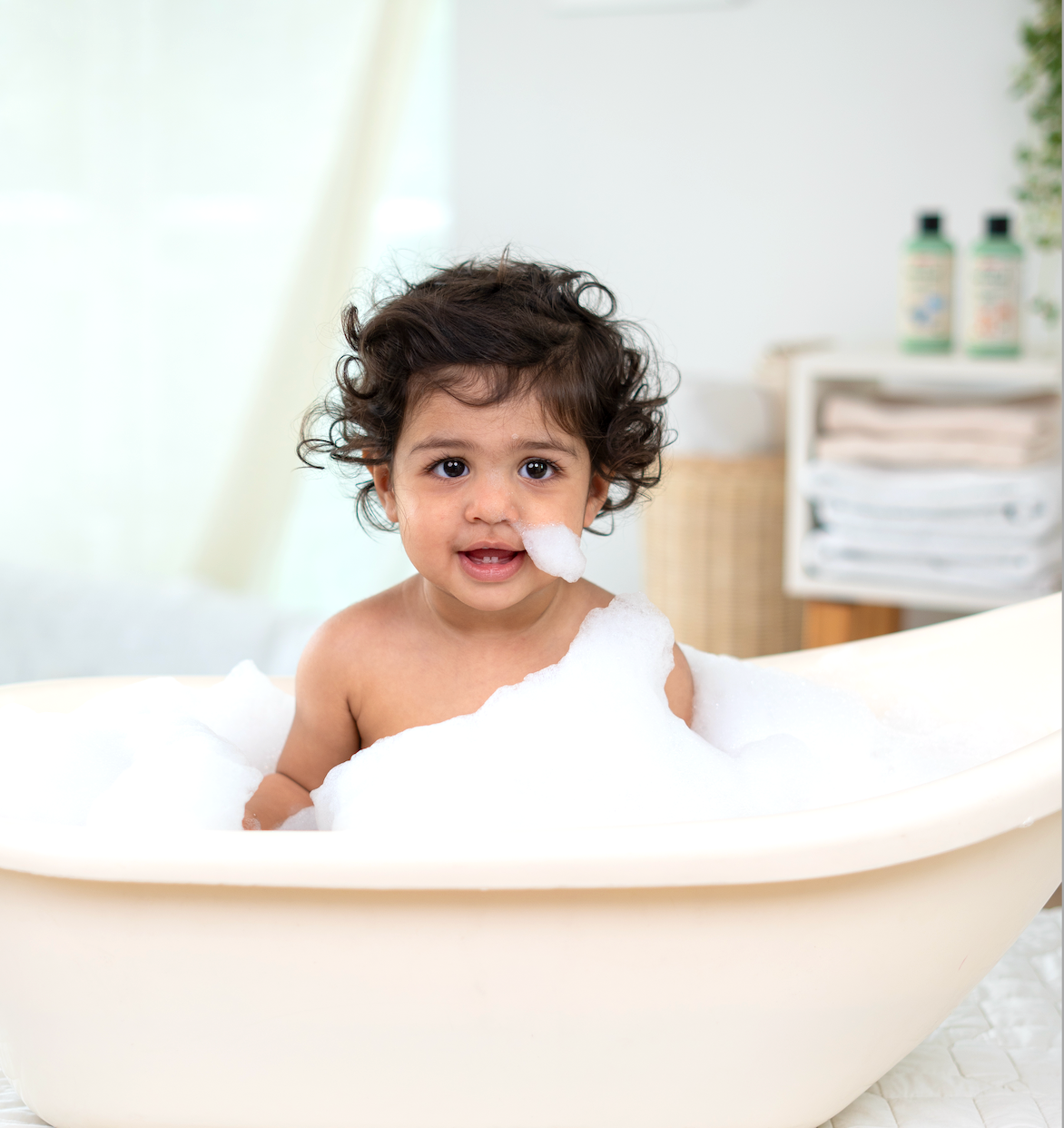

The first bath of your newborn is a memorable moment you’ll always remember. It’s a beautiful combination of excitement, tenderness, and a few nervous butterflies as you carefully hold your little one and prepare for those first tiny splashes. With loving guidance, your mother-in-law is probably offering three different pieces of advice at the same time. Every new parent in India has stood exactly where you are standing. And here's the truth: bathing your baby is not about finding perfection. It's about being present, prepared, and gentle.
You’ve probably heard of age-old rituals like strong oil massages or rubbing ubtan on a newborn before bath time to clean or brighten their skin. They’re done with love, and we respect that tradition. But a newborn’s skin is still building its protective barrier, and anything rough can cause tiny, invisible tears that lead to irritation or infection. This newborn baby bathing guide walks you through it all, from setting up a cosy bath space and choosing gentle products to holding your baby safely for those first little splashes.
The Pre-Bath Checklist: Set Up Your "Warm Zone" First
Here is the single most important rule of baby bathing: a safe bath begins before the water ever touches your baby. Once you start, you cannot leave your baby unattended, not for a doorbell, not for a phone call, not for a second.
Gather all your essential baby bath products and keep them within reach before you undress them:
-
Water temperature: Aim for 37°C to 38°C, which is comfortably warm when you dip your inner elbow or wrist into it. Never test with your hand; the inner elbow is far more sensitive.
-
Room temperature: Switch off fans and ACs during winter and monsoon months. Even a mild draft can cause a newborn to lose body heat quickly.
-
Soft towel: Kept open and ready to wrap the baby the moment they come out of the water.
-
Clean nappy and fresh clothes: When your baby’s fresh from the bath, the last thing you want is to be searching drawers. Keep everything ready so you can dry, diaper, and dress them in one easy, calm routine.
-
Keep baby wipes within arm’s reach during bath time: They’re especially handy in the first two to three weeks when you’re doing sponge baths while the umbilical cord heals. A good wipe lets you gently clean the diaper area, face folds, and neck creases without disturbing your baby’s delicate moisture barrier.
For this, Pigeon Baby Skincare Wipes are a solid choice. They’re alcohol-free and enriched with glycerin, so they clean gently without stripping moisture from newborn skin.
How to Hold Newborn Baby During Bath: A Safe and Gentle Technique
Many new parents are still wondering how to hold a newborn baby during a bath, as newborns are slippery, squirmy, and feel alarmingly fragile. The technique that works best is called the cradle hold.
Use your non-dominant arm to support your baby's head and neck, sliding it gently under the back of their head. Your hand grips their far armpit firmly. This keeps their head elevated above the water at all times, leaving your dominant hand free to wash them. Never let go of this support; your baby's neck muscles are still too weak to hold their head up independently.
Step-by-Step Bathing Sequence
Step 1: Gently lower the baby into the tub feet-first, keeping the cradle hold throughout.
Step 2: Start with the face. Use a soft damp cloth with no soap on the face. Wipe each eye from the inner corner outward with a fresh section of cloth.
Step 3: Move to the scalp. Use a tiny amount of mild cleanser and massage very gently with your fingertips. Rinse carefully, shielding their eyes.
Step 4: Work down the body, including the chest, arms, and legs, always keeping one hand supporting the head and neck.
Step 5: Clean the folds, like the neck, underarms, behind the knees, and between the fingers and toes. These tiny creases trap moisture and need gentle attention.
Step 6: Gently roll the baby onto their front (still supported) to clean the back.
Step 7: Lift the baby out and immediately wrap them in your pre-laid towel.
Best Soap to Use for a Newborn's First Bath in India
A newborn's skin is approximately 30% thinner than adult skin. It does not need harsh lathering or heavily fragranced products. What it needs is a hypoallergenic, pH-balanced cleanser that cleans without stripping.
For everyday mild cleansing and ultra-sensitive skin: The Baby Calming Soap 75g blends glycerin and lavender to gently cleanse your baby’s skin without drying it out. It keeps that natural softness intact, which is why many parents consider it one of the best soap for newborn babies in India.

For dry skin or during season changes (winter, monsoon): Reach for the Pigeon Baby Creamy Bathing Bar (75g). Enriched with coconut oil, aloe vera, and shea butter, it provides an extra layer of nourishment that dry, weather-stressed baby skin genuinely needs.

Post-Bath: The Golden 3 Minutes
The moment your baby leaves the water, two things begin happening simultaneously: their body temperature starts dropping, and their skin starts losing moisture. So, choosing the right moisturiser after bath is a crucial part of your baby's skincare routine.
Use soft, dabbing motions across every inch of their skin, including all those little folds. Then, lock in the moisture immediately. Many parents reach for traditional oils, but heavy oils can linger on the skin and block newborn pores instead of absorbing properly. A dermatologically tested moisturiser works at a cellular level to actually nourish the skin barrier.

The Pigeon Baby Body Butter 50GM is formulated without parabens or sulphates and is designed to deeply nourish newborn skin, reduce itching and dryness, and keep the skin's pH balanced. Apply it while your baby's skin is still slightly damp to seal in that post-bath moisture and make your little one feel incredibly soft and calm.
Wipes vs. Creamy Bathing Bar: When to Use What
|
Situation |
Best Choice |
|
Diaper change, quick face clean, between feeds |
Pigeon Baby Skincare Wipes |
|
Full bath, normal weather, regular cleansing |
Pigeon Baby Bathing Bar |
|
Full bath, winter/monsoon, dry or sensitive skin |
Pigeon Baby Creamy Bathing Bar |
|
Post-bath moisture lock |
Pigeon Baby Body Butter |
Baby Bath Safety Tips Every New Parent Should Follow
Before you start, a few essential baby bath safety tips can make bath time much calmer for you and your newborn.
Water depth: Only 2 to 3 inches; that’s enough to keep your baby comfortable and clean without any risk of submersion. Shallow water means you stay in control.
Support the head: Newborns can’t hold their heads up yet, so cradle their neck and head securely at all times. Keep their face and ears well above the water, using your forearm or the curve of your hand as a steady, gentle support.
A consistent bath routine for newborn Indian parents can trust should be simple and comforting. Adjust it for the weather, your baby’s skin, and what your pediatrician suggests, then stick to gentle cleansing, careful patting dry, and moisturising after each bath.
Conclusion
The first bath might feel clumsy. Your hands might tremble slightly, and your baby might protest loudly; that is completely normal. But by week three or four, something shifts. What once felt like a high-stakes procedure becomes one of the sweetest parts of your day. A warm routine filled with coos, tiny splashes, and the kind of closeness that only bath time brings.
Every confident parent started exactly where you are right now. Explore the complete, dermatologically tested Pigeon Baby Care Range to ensure your little one's skin stays perfectly soft, hydrated, and protected from the very first bath and every gentle one that follows.
FAQs
Q. How do I prepare for a newborn's first bath at home?
A. Set up a warm, draught-free space with all baby bath products ready and water at 37–38°C. Keep wipes for newborns nearby and follow safety tips for bathing your baby, such as never leaving your baby unattended.
Q. What soap is best for a newborn's first bath?
A. The best soap for newborn babies in India is a hypoallergenic, pH-balanced option like Pigeon Baby Bathing Bar that cleans without stripping delicate skin.
Q. Can I use baby wipes instead of a bath for my newborn?
A. Yes, alcohol-free wipes are perfect for sponge baths while the umbilical cord heals, but use a mild bathing bar for full baths to protect delicate skin.
Q. Why is my newborn crying during bath time?
A. Newborns often cry because the sensations are new; that is, cold air, water temperature, or hunger can unsettle them. Keep baths warm, short, and calm, then wrap them up and moisturise immediately to help them feel secure and comforted.
Q. How do I hold my newborn safely during a bath?
A. Use the Cradle Hold to support their head and neck, keeping their face above water. This is a key step in any newborn baby bathing guide and safe bath routine Indian parents follow.